Guidelines for Implementation of Migration to IS/IEC 62368-1:2023
Introduction
The Guidelines for Implementation of Migration to IS/IEC 62368-1:2023 define the transition framework for manufacturers to shift from older safety standards to the latest IEC 62368-1:2023 standard. This standard is applicable to audio, video, information, and communication technology equipment and focuses on a hazard-based safety engineering (HBSE) approach. The migration ensures that products comply with updated safety requirements, improve user protection, and meet global regulatory expectations.
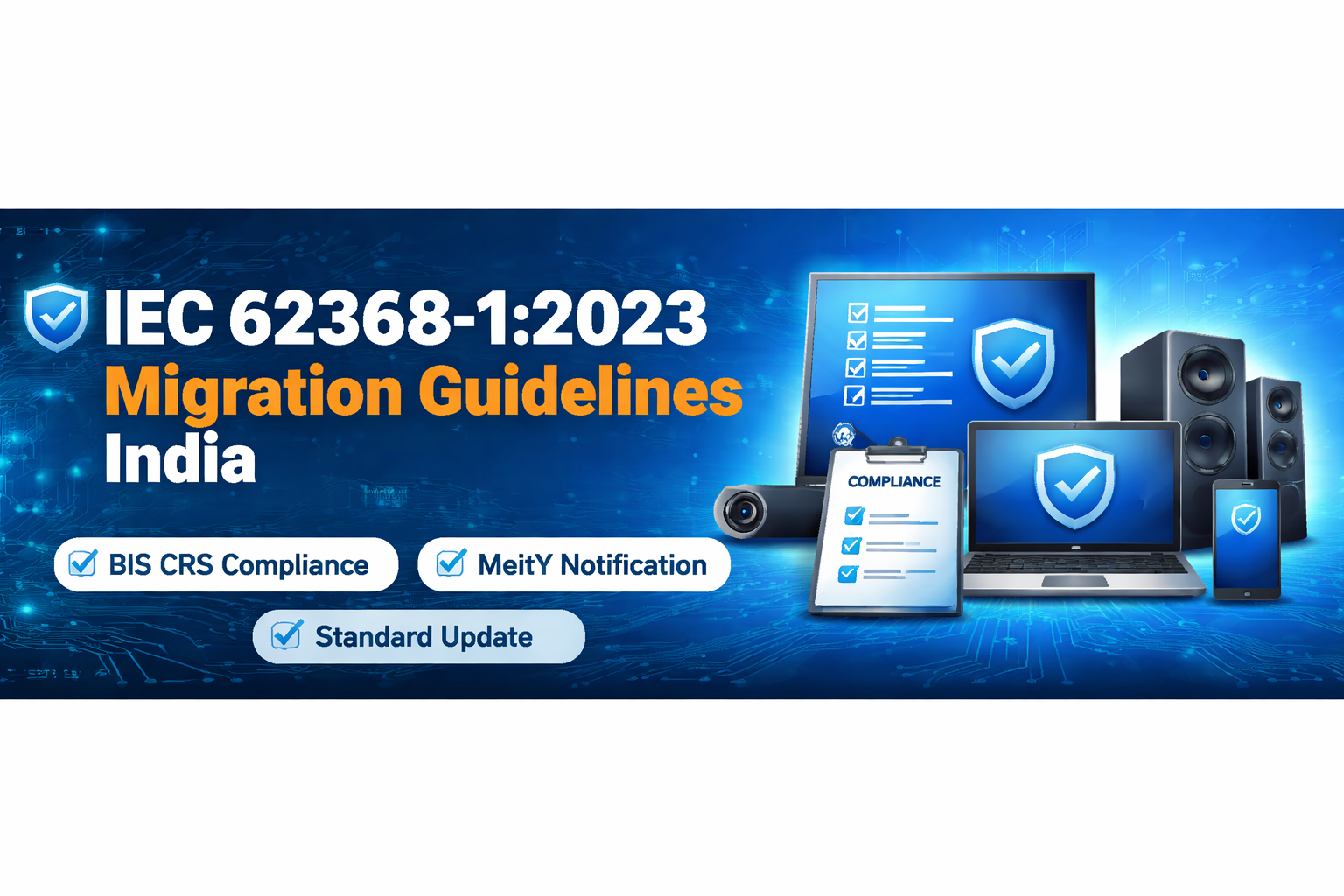
Guidelines for Implementation of Migration to IS/IEC 62368-1:2023
Official Notification by MeitY
The Ministry of Electronics and Information Technology (MeitY) has vide its Notification S.O. 4997(E) dated 29 October 2025, amended the Electronics and Information Technology Goods (Requirement of Compulsory Registration) Order, 2021. Through this amendment, IS/IEC 62368-1:2023 titled “Audio/Video, Information and Communication Technology Equipment – Part 1: Safety Requirements” has been notified for mandatory compliance under the Compulsory Registration Scheme (CRS).
This newly introduced standard supersedes the following Indian Standards previously covered under the CRO:
- IS 13252 (Part 1):2010
- IS 616:2017
Official IS/IEC 62368 Notification (PDF)
📄 View / Download PDFIS/IEC 62368-1:2023 Overview
IS/IEC 62368-1:2023 is an internationally aligned safety standard adopted in India for electronic and IT equipment. It replaces older standards and brings a unified compliance structure. The standard is designed to address modern technologies and risks, ensuring safer product design and manufacturing practices. Businesses dealing in electronics must understand IEC 62368 compliance to avoid regulatory issues and ensure market acceptance.
Purpose of Migration Guidelines
The primary purpose of migration to IEC 62368-1:2023 is to ensure a smooth transition from legacy standards without disrupting business operations. These guidelines help manufacturers, importers, and brand owners understand compliance timelines, testing requirements, and certification procedures. It also ensures alignment with international safety norms, making products globally competitive.
Key Requirements Under IEC 62368-1:2023
The IEC 62368 standard introduces a hazard-based safety approach instead of prescriptive rules. Manufacturers must identify potential energy sources, classify hazards, and implement safeguards to prevent injury or damage. The standard also emphasizes proper insulation, fire resistance, electrical safety, and mechanical stability of products. Compliance requires testing by BIS-recognized laboratories and proper documentation.
Migration Timeline and Compliance
The migration timeline is defined by regulatory authorities such as BIS, and companies must ensure that all existing and new products comply within the specified deadline. After the migration date, products based on old standards may no longer be accepted for certification or sale in the Indian market. Therefore, timely compliance with IS/IEC 62368-1:2023 is crucial for uninterrupted business operations.
Impact on Manufacturers and Importers
Manufacturers and importers must upgrade product designs, testing processes, and certification documents to meet IEC 62368 requirements. This may involve re-evaluation of existing products, additional testing, and updating technical files. Non-compliance can lead to product rejection, penalties, or market restrictions. Hence, early adaptation is highly recommended.
Benefits of IEC 62368-1:2023 Compliance
Adopting IEC 62368-1:2023 provides multiple benefits including improved product safety, international acceptance, and enhanced brand credibility. It also simplifies compliance by replacing multiple standards with a single unified framework. Additionally, it supports innovation by allowing flexible design approaches based on risk assessment rather than fixed rules.
IEC 62368 Certification Process
The certification process involves product testing, documentation review, and approval from BIS under the Compulsory Registration Scheme (CRS). Applicants must submit technical details, test reports, and safety compliance documents. Once approved, the product can be legally sold in India with the required certification mark.
Conclusion
The migration to IS/IEC 62368-1:2023 is a significant step toward enhancing product safety and aligning with global standards. Businesses must proactively adapt to these guidelines to ensure compliance, avoid disruptions, and maintain market presence. By implementing IEC 62368 standards effectively, companies can achieve better safety, regulatory approval, and long-term growth in the electronics industry.